


Flibanserin
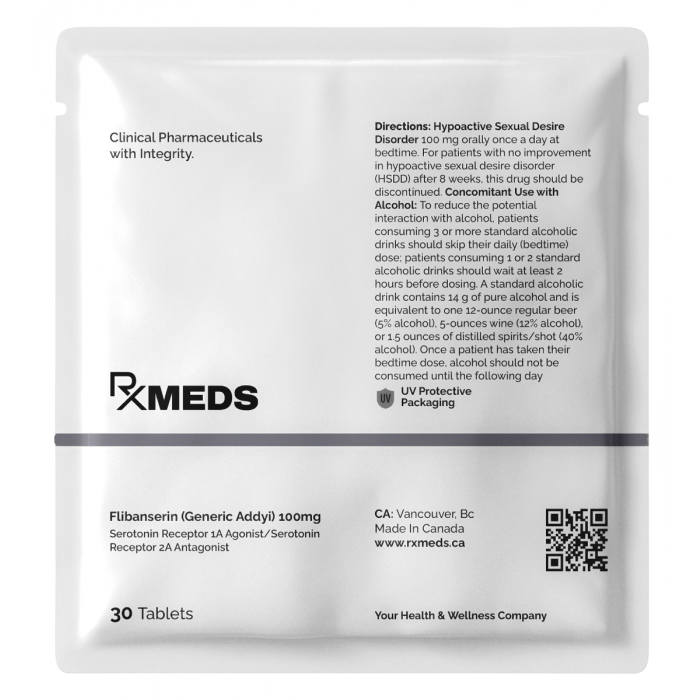
Flibanserin 100 mg
Flibanserin (Addyi) 100mg: Flibanserin is a medication used to treat low sexual desire in premenopausal women who have not had a history of low sexual desire. It is only for use when the condition is not due to medical, psychological, or relationship issues. Available under a special program.

Sold Out :
Free shipping on orders over 250 CAD FAQs.
Restrictions
This product can only be shipped to Canada only.
Overview
Flibanserin (Addyi), marketed under the brand name Addyi, is a prescription medication approved for the treatment of premenopausal women with hypoactive sexual desire disorder (HSDD), a condition characterized by a lack of sexual desire that causes distress. It works by affecting serotonin receptors in the brain, helping to restore a balance among certain neurotransmitters, specifically serotonin, dopamine, and norepinephrine, which play a role in sexual interest and arousal.
Pregnancy and Breastfeeding Considerations
Pregnancy Warnings:
Flibanserin is categorized under the US FDA's "Not Assigned" pregnancy risk category, as the FDA has shifted to providing more detailed risk summaries instead of using A, B, C, D, and X labels. Currently, there are no adequate and well-controlled studies in pregnant women to definitively assess the risks of flibanserin use during pregnancy. However, animal studies have shown that at high doses—significantly above the maximum recommended human dose (MRHD)—flibanserin can cause fetal harm in the presence of maternal toxicity. Specifically:
- In rats dosed at 41 times the MRHD, significant maternal toxicity was observed, including reduced weight gain, as well as adverse fetal effects like decreased weight, delayed bone ossification, and additional lumbar ribs.
- Rabbits given 40 times the MRHD exhibited maternal toxicity, with findings of increased resorptions and decreased fetal weights, although no direct teratogenic effects were reported.
Despite these findings, there is no conclusive data on the drug's effects in human pregnancy, so healthcare providers should weigh the benefits against potential risks before prescribing flibanserin to pregnant women.
Breastfeeding Warnings:
Flibanserin is not recommended for use during breastfeeding due to unknown effects on milk production or the breastfed infant. While it is unknown if flibanserin passes into human breast milk, studies in animals indicate that it is excreted into milk. Given the potential for serious adverse effects, such as sedation in the breastfed infant, healthcare providers advise against flibanserin use for breastfeeding mothers.
Dosage:
The recommended dosage of flibanserin is 100 mg, taken orally once daily at bedtime. It is essential to take the medication at bedtime due to the risk of adverse reactions like low blood pressure, dizziness, and fainting, which may be exacerbated if taken during waking hours. Additionally, patients should avoid alcohol while using flibanserin, as it can significantly increase the risk of severe side effects.
Further Information:
Consultation with a healthcare provider is crucial to ensure flibanserin is a suitable treatment option, considering each patient's unique health circumstances. This includes careful evaluation of pregnancy or breastfeeding status, as well as adherence to prescribed dosage instructions and precautions regarding alcohol use.
Reviews
RxMeds posts ALL reviews, positive or negative :-)
Morgan
Faith
Phoenix
Georgia
Marian
Sky
Alicia
Thea
Amaya
Lilith
Items 1 to 10 of 53 total